During the reign of the Ilkhanid dynasty, around the 13th-14th centuries, tiles with an enchanting iridescent sheen adorned the walls of mosques and shrines, as well as a palace in former Persia, now Iran. This glazing technique required particularly advanced technological knowledge. Recent research into their origins has revealed some surprising facts. We now know that these tiles are also literally puzzle pieces, that they were recycled, and that the images on the tiles are still a source of artistic inspiration in Iran. 

Lustrous shimmer and sheen

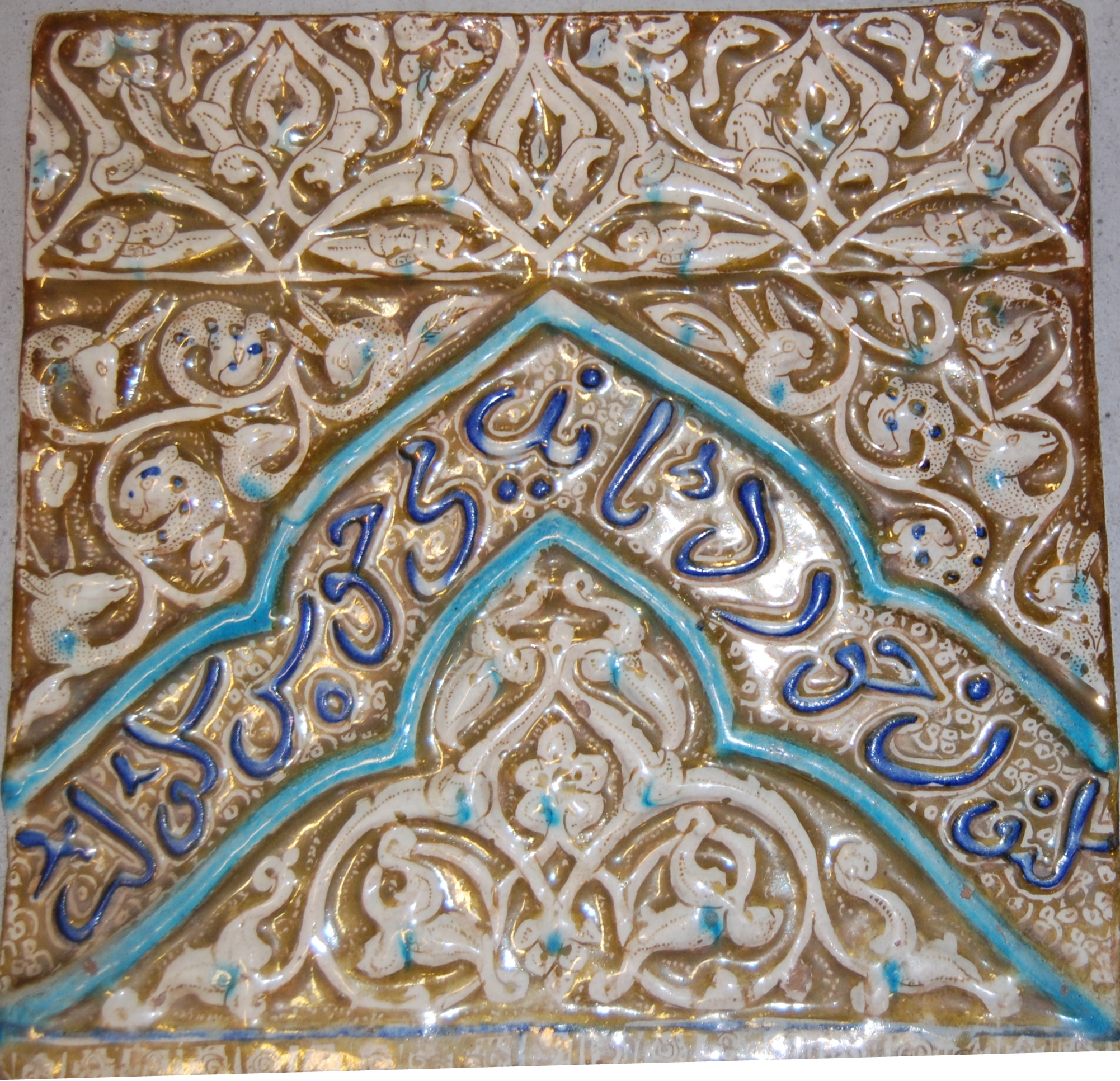
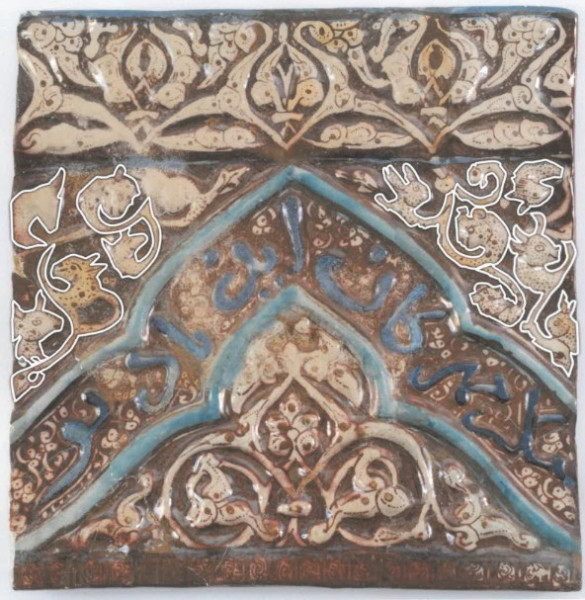
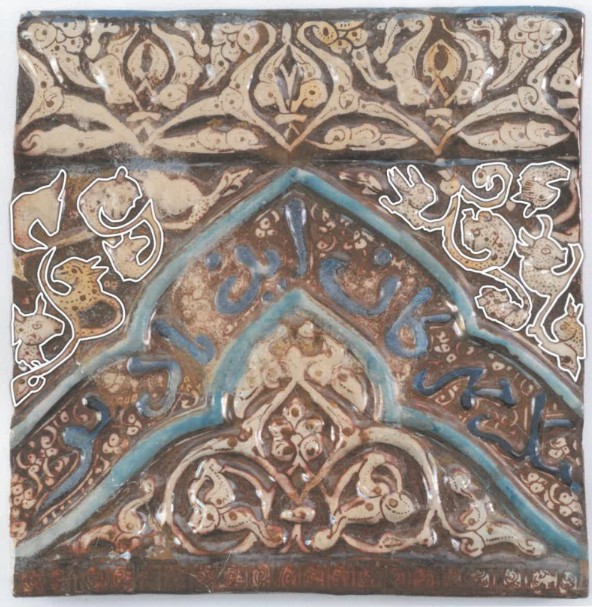
This square tile - 30 x 29 centimeter - is covered in lustre glaze, a technique that leaves an iridescent shimmer. Highly advanced technological knowledge is necessary to produce this effect. The technique was refined to perfection in the city of Kashan in formerly Persia, nowadays Iran, under the Ilkhanid dynasty around the 13th-14th century.The tiles adorned mostly the interior and exterior surfaces of mosques and shrines during this period.

Lustertegel
Tegel met bronsbruin, kobaltblauw en turkoois glazuur. (WM-64820)

Lust for lustre

From the 19th century onwards, Europeans eagerly collected lustre tiles. Many of the Ilkhanid designs also inspired - or were appropriated by - artists such as Escher and artistic currents such as the Arts and Crafts Movement in the United Kingdom. The word ‘luster’ is still used today, for example in make-up with a metallic shine.

This tile, was not sold to the museum in the 19th century, but in 1975, showing how the lust for lustre continued far into the 20th century. It was sold as being made in Kashan,famously the production centre of luster tiles.

Luster tegel
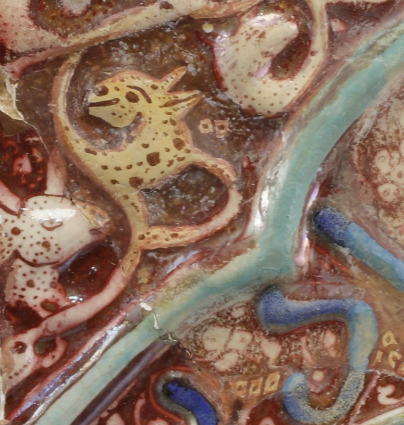
This luster tile (13th century) depicts a niche and various animals. The niche can be traced back to the prayer niche in the mosque (mihrab). It is a characteristic feature of Islamic architecture. The other motifs refer to the waqwaq tree.

Takht-I-Sulaiman

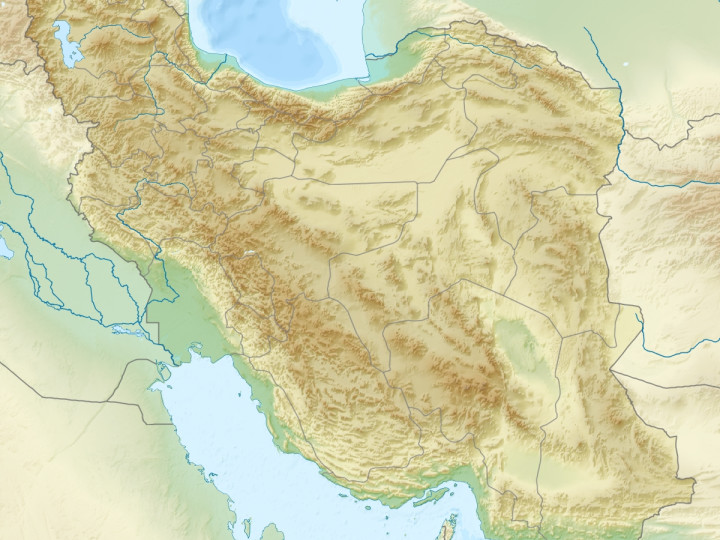
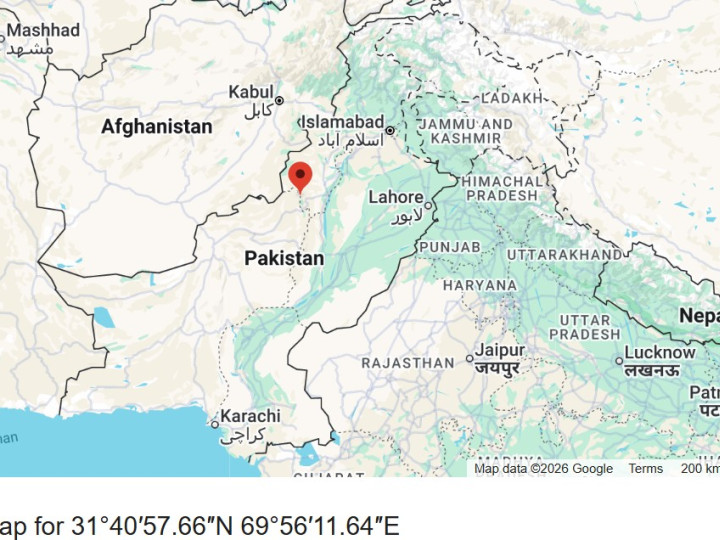
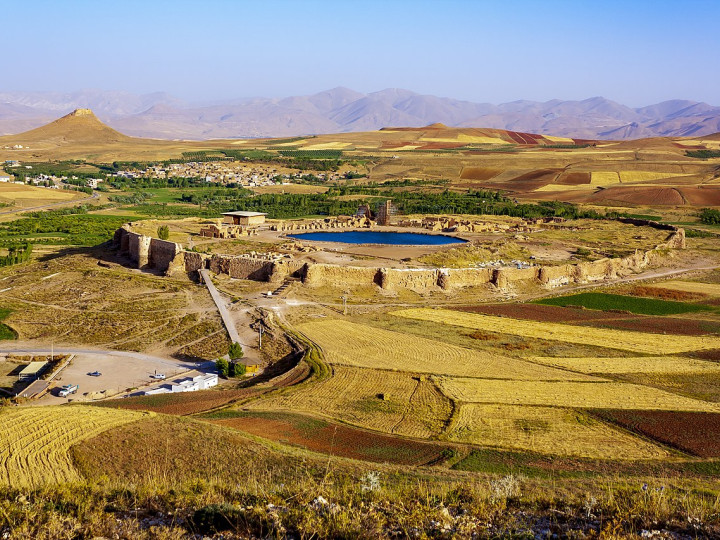
Museums worldwide collected tiles with very similar designs and measurements during the 19th century, more than 160 tiles are known. Their provenance is largelyundocumented. In hindsight, most of them were attributed to the archaeological site of Takht-I-Sulaiman (Throne of Solomon) in Iranian Azerbeijan, after a German archaeological expedition found similar sherds and moulds for this exact type of tile. Takht-I-Sulaiman is well known, especially because it is the only thoroughly excavated non-religious structure to have survived from the Ilkhanid period. 

Another reason for the Wereldmuseum to acquire this tile, was the “Qur’anic inscription” in blue writing. This could be used to demonstrate the ‘sacred character of the Arabic script’. However, the text was mistakenly assumed to be in Arabic, while it was in fact written in Farsi.

British museum tegel
British Museum (Londen, no. 1878,1230.573.1): Konun khword bāyad mey-e khosh gavār / Now [we] must drink this exquisite wine.

The Book of Kings

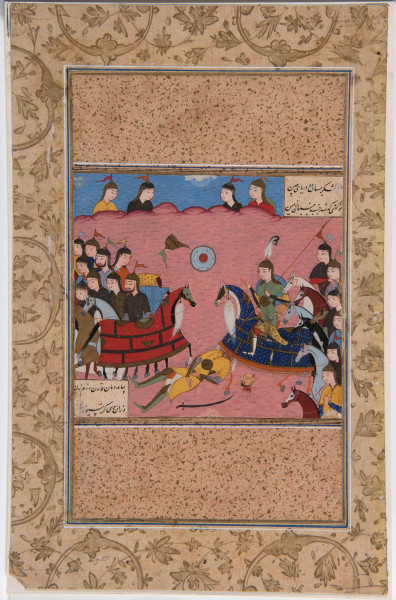
When bringing together information on this category of square lustre tiles, it appears that many of them features half a verse (hemistich) from the Shahnameh. 

The Shahnama, the Book (nama) of Kings (shah), is a long epic poem - one of the longest in world literature - by the renowned poet Ferdowsi (ca. 934 – ca.1025). It combines the mythology and history of the Persian empire and is written around the turn of the first millenium in present-day Iran. The Shahnama is not only frequently quoted, depicted and still an inspiration for contemporary artists today, but many Farsi-speaking people are, until today, also able to quote and recognize Ferdowsi’s lines.

Does this mean that the palace of Takht-e Sulaiman had the entire Shahnameh in ceramic form plastered on it walls? Based on the few known tiles, it appears that this is not the case. Only suitable, decorative quotes on the pleasures of life at the court were chosen for palace adornment, with few allusions to any religion. 
 

Restoration or collage?

So which verse was chosen on our tile here? The text, reads as “Magar mehregān āyad bād-e to / Unless autumn will come from your wind”. Strangely, this hemistich does not appear in the regular versions of the Shahnameh. Did the calligrapher make a mistake or chose to improvise or is something else at stake? 

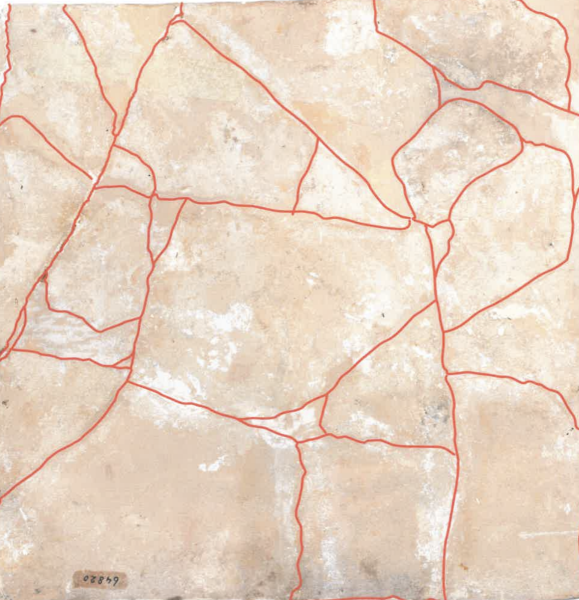
This tile was heavily restored before it was sold to the museum. This can be seen clearly from the back where different cracks are visible. The front as well, shows wherefigurines were added in a different style where paint does not show the so loved lustre sheen. Additionally, the glaze has strongly eroded on some parts and less on others.Perhaps this tile is in fact a collage of different sherds pieced together, a practice that was and still is not uncommon in the artworld.  And does this mean that the verse is in fact an improvised intervention by a creative restorer? These questions will unfortunately remain unanswered for now. Can we at least say that the tile came from the archaeological site of Takht-I-Sulaiman?

Lustertegel

Traveling tiles

Recent research suggests that, although this type of tiles is classically said come from Takht-I-Sulaiman, which was the only excavated and documented palace of the Ilkhans, this dynasty took pride in many other splendid palaces and seasonal residences, living as “royal nomads”. These other buildings, some perennial, some permanent, may havefeatured similar tiles which could have been found by 19th collectors and distributed over European museums. Parts of this tile could therefore come from other places as well. 

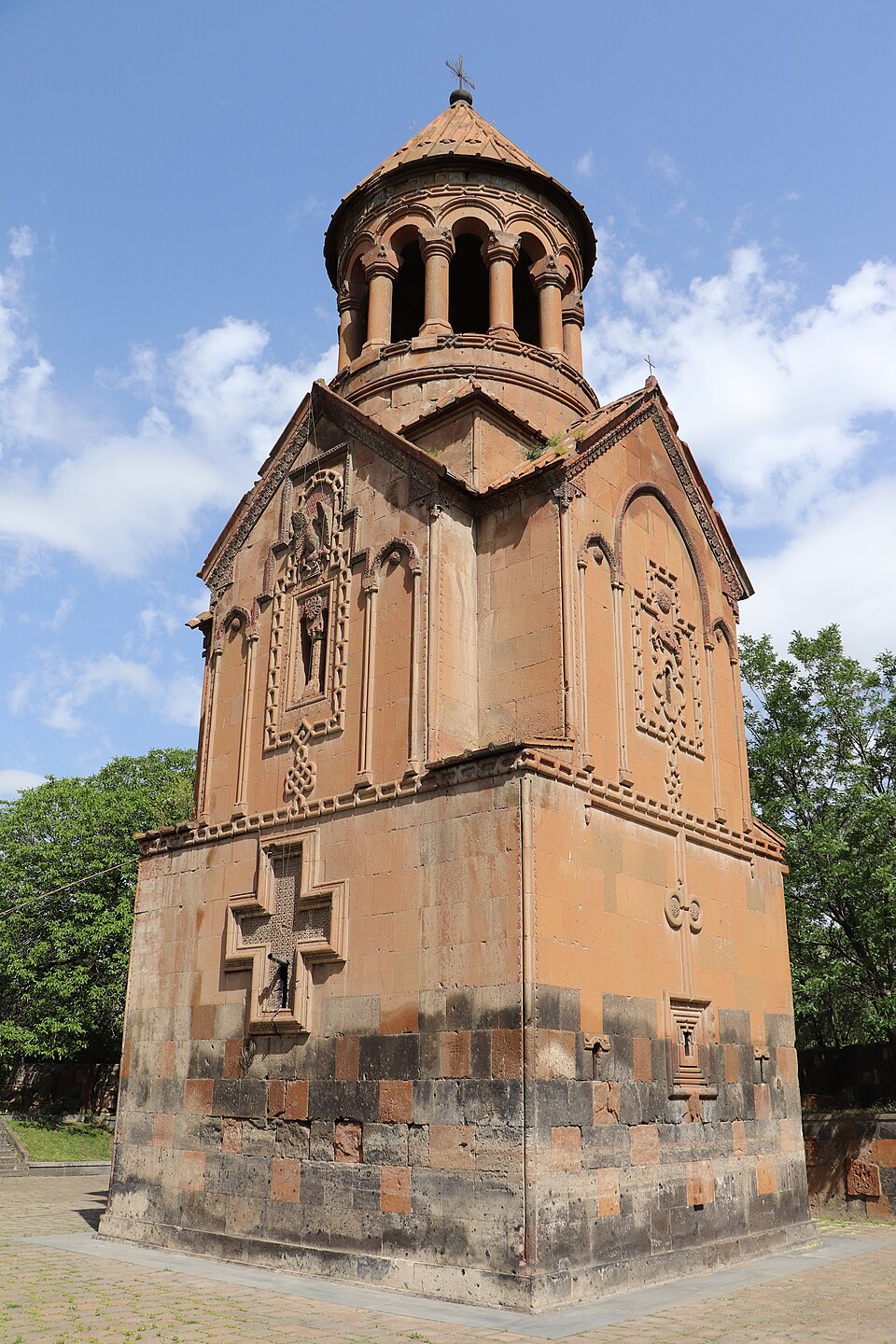
Another possibility is that tiles were removed from the walls of Takht-I Sulaiman and were ‘recycled’ as decoration for other buildings. Several examples are known, for instance the 14th century church of Eghvard in Armenia. Some of these buildings could have been, on their turn, plundered the 19th century, and their tiles taken off to Europe. 

Holy Mother of God Church
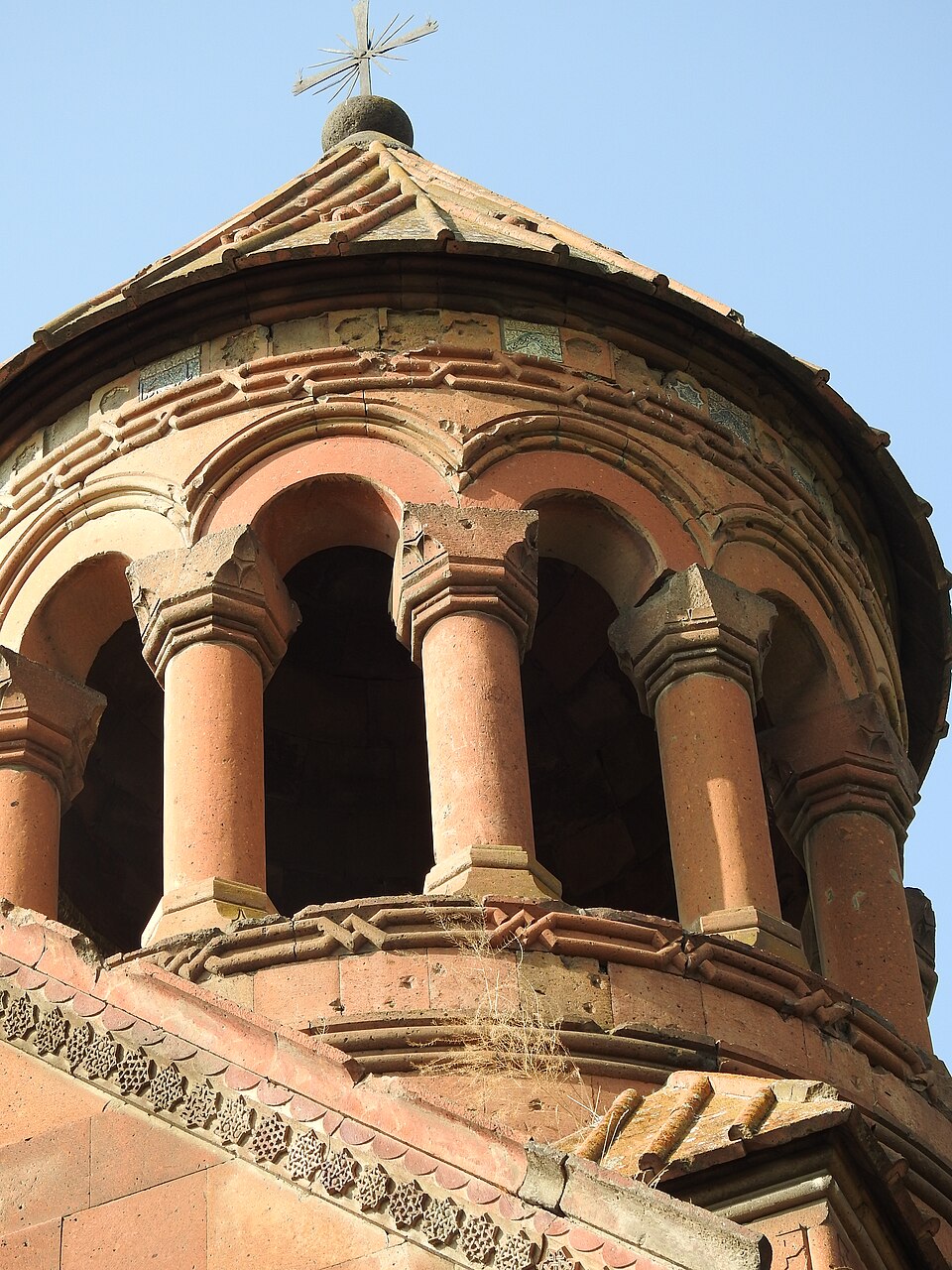
Holy Mother of God Church, or Yeghvard Church, a medieval church in the city Yeghvard in Armenia. It was completed in 1301 during the rule of the Zakarid dynasty by the architect  Vardapet S hahik. Luster tiles are visible just beneath the roof.

A little unveiled

Systematic sampling and comparison between the composition of the individual sherds of this tile could determine differences and similarities. Those could then be compared to the composition of 160 tiles documented spread all over the world. The quest for the provenance of this tile, however, tells us broader stories on fraught, histories of trade, illegal looting and restoration of material from the 19th century until now. It also shows how museums can sometimes contribute to obscuring history, in this case, by accepting the misidentification “from Kashan”, and paying insufficientattention to the specifics of the writings on the tile, which did not come from the Qur’an. Attributing the provenance to the archaeological site of Takht-I-Sulaiman is a step closer in the right direction. However, new research now offers the possibility of a multitude Ilkhanid palaces.

Holy Mother of God Church
Holy Mother of God Church, or Yeghvard Church, a medieval church in the city Yeghvard in Armenia. It was completed in 1301 during the rule of the Zakarid dynasty by the architect  Vardapet  Shahik. Luster tiles are visible just beneath the roof.

Another Ilkhanid-style lustre tile can be seen in the Asia Room of Wereldmuseum Leiden, from the mausoleum of Yahya in Varamin near Tehran. 
 

Lustertegel
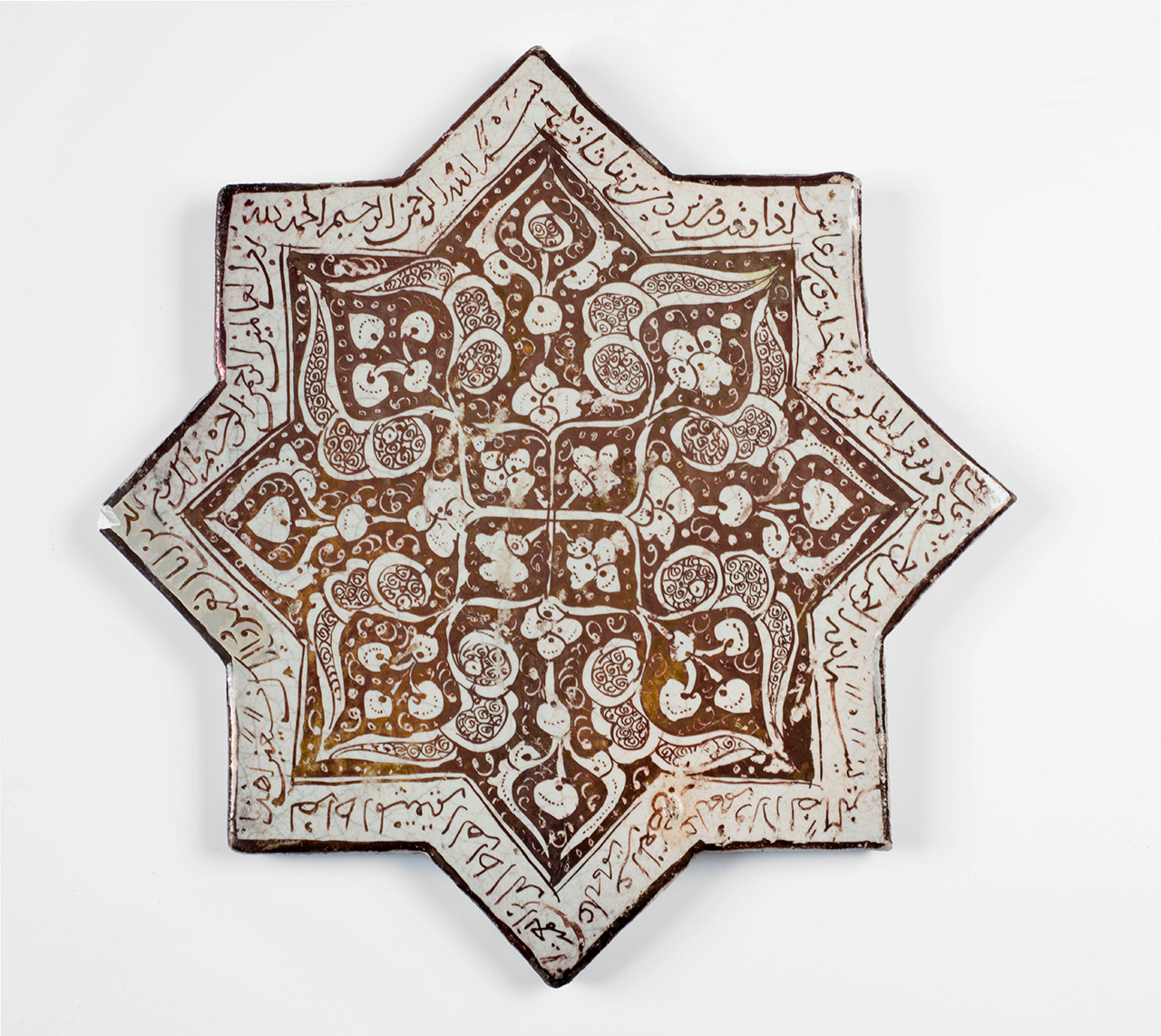
On the edge of this 14th-century tile are verses from the Koran. The tile is decorated with plant motifs featuring palmettes (stylized palm leaves) that create the illusion of endlessness. (WM-66085)

About the author:

Karolien Nédée is a PhD candidate at the Faculty of Law of UCLouvain-Saint-Louis in Brussels, researching the legal framework surrounding colonial collections in Belgium. Between 2022-2025, she worked as provenance researcher at Wereldmuseum Rotterdam.

Bibliography / Leestips 
Lustreware - Wikipedia  Lustre Tiles: Kashan Tiles  — Art of Islamic Illumination 
Bain Rowan 2024. Tulips and Peacocks. William Morris and Art from the Islamic World, Yale University Press: New Haven and London. 
Masuya Tomoko 2000. Persian Tiles on European Walls: Collecting Ilkhanid Tiles in Nineteenth-Century Europe, Ars Orientalis 30: 39-54. 
Porter Yves 2021. Talking Tiles from Vanished Ilkhanid Palaces (Late Thirteenth to Earley Fourteenth Centuries): Frieze Luster Tiles with Verses from the Shah-nama  Journal of Material Cultures in the Muslim World 2:97-149. 
Piller, Micky, Tempel Benno & Shatanawi Mirjam 2013. Escher meets Islamic art, Thoth Uitgeverij. 
Tibbe Lieske 2005 Natuurstaat en verval- discussies over exotische kunststijlen rondom de Internationale Koloniale Tentoonstelling van 1883, in Discussies over exotische kunststijlen.